
A Gasoline Chain Saw may look like a simple cutting tool, but inside its compact body is a combination of engine technology, mechanical transmission, safety systems, and precision components. The reason a small handheld machine can cut through thick wood quickly lies in the cooperation of multiple hidden systems.
From the fuel combustion process to the high-speed movement of the cutting chain, every component plays an important role in converting engine power into cutting performance.
Understanding how a gasoline chain saw works not only helps users better operate the tool but also reveals the engineering ideas behind one of the most widely used outdoor power tools.
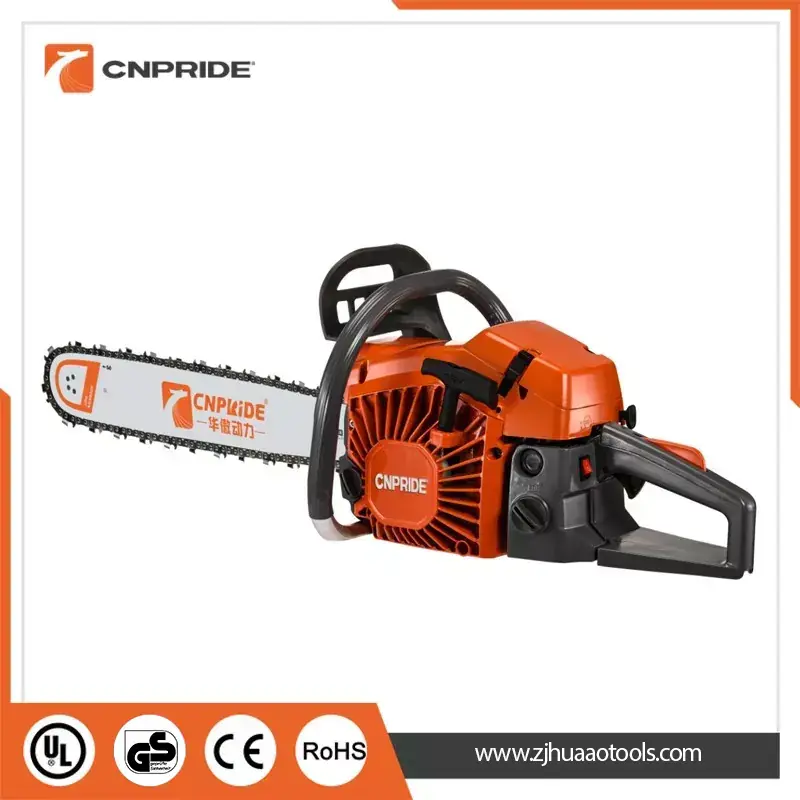
A gasoline chain saw is a portable cutting tool powered by a fuel engine. Unlike electric chain saws that rely on batteries or external power sources, gasoline models generate power through internal combustion.
The main purpose of a chain saw is to cut wood by driving a rotating chain equipped with sharp cutting teeth around a guide bar.
Common applications include:
The heart of a gasoline chain saw is the small combustion engine inside the machine.
The basic working process includes:
This continuous energy conversion allows the chain to rotate at high speed and perform cutting operations.
The engine provides the power source of the entire machine.
Most gasoline chain saws use two-stroke engines because they offer:
Engine size and design directly affect cutting capability and working efficiency.
The fuel system controls the mixture of gasoline and air entering the engine.
A properly adjusted fuel system helps maintain:
The clutch is a hidden but important component that connects the engine power to the cutting chain.
When the engine reaches a certain speed, the clutch engages and transfers power to the chain.
This design allows the chain to remain stopped when the engine is running at idle speed.
The guide bar provides the track for the chain, while the chain contains multiple cutting teeth that remove wood material.
The cutting system includes:
The design and sharpness of the chain greatly influence cutting performance.
The cutting chain moves at high speed, creating friction between the chain and guide bar.
The lubrication system automatically delivers oil to reduce:
Proper lubrication helps improve cutting efficiency and extend component life.
Modern gasoline chain saws include safety features designed to reduce risks during operation.
The chain brake can quickly stop chain movement under certain conditions.
This system is one of the important developments that has improved modern chain saw safety.
Many people wonder how a relatively small tool can cut through large pieces of wood.
The answer comes from the combination of:
Instead of using a single blade to push through wood, the chain saw uses many small cutting teeth moving continuously around the guide bar.
Each tooth removes a small amount of material, creating an efficient cutting process.
The clutch is one of the most interesting mechanical parts inside a gasoline chain saw.
At low engine speeds, the clutch remains disengaged, allowing the engine to run without moving the chain.
When the throttle increases, centrifugal force activates the clutch and transfers power to the chain.
This simple mechanical principle improves both usability and safety.
Although battery-powered tools have become more popular, gasoline chain saws remain widely used because of their power and flexibility.
| Feature | Gasoline Chain Saw | Electric Chain Saw |
|---|---|---|
| Power Output | High power for demanding tasks | Suitable for lighter applications |
| Energy Source | Fuel | Battery or electricity |
| Outdoor Mobility | No charging limitation | Depends on battery capacity |
| Maintenance | Requires engine maintenance | Usually simpler maintenance |
| Common Applications | Forestry and heavy cutting | Home gardening and small jobs |
Modern gasoline chain saws continue to develop with improvements in:
These improvements make professional and personal use more convenient while maintaining strong cutting capability.
A gasoline chain saw is more than just a motor and a moving chain. Inside the compact structure are carefully designed systems that work together, including the engine, clutch, lubrication system, guide bar, and safety mechanism.
The next time you see a chain saw quickly cutting through wood, remember that behind this simple operation is a combination of mechanical engineering and smart design.


