
However, as usage increases, a frustrating problem is heating up discussions across industry forums and user groups: Why did my brush cutter run like a beast for the first few months, but now it struggles to start, idles roughly, smokes heavily, and won't even cut grass properly? Is the machine itself poor quality, or have you been using and maintaining it the wrong way from day one?
Based on the latest industry technical materials and real‑world repair experience, this article will give you an in‑depth guide to identifying the most common brush cutter faults, the steps to fix them, and how to prevent them – so you can get your equipment back to fighting fit.
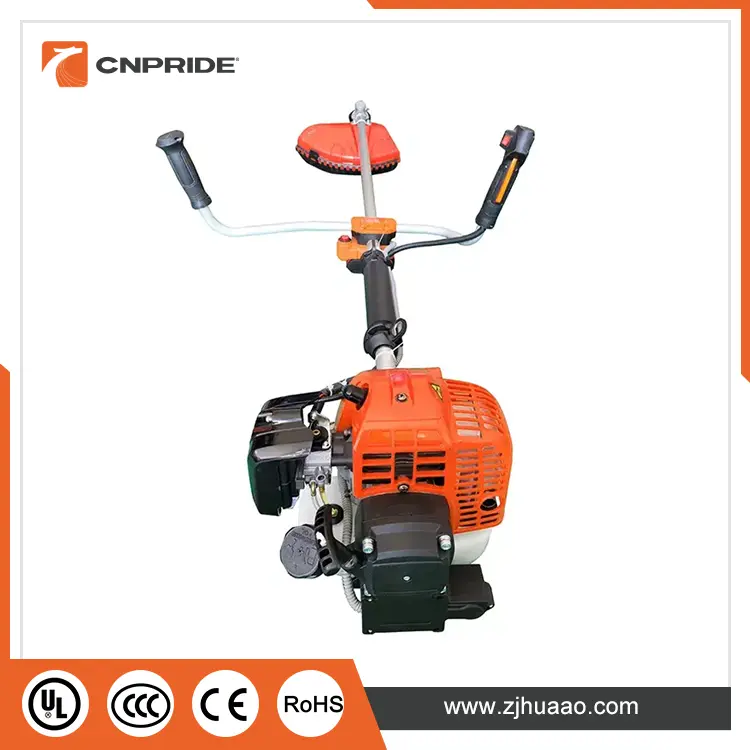
Before we dive into faults, it is worth clearing up a basic confusion. Many users treat brush cutters and ordinary string trimmers as the same thing, but they are designed for completely different jobs.
| Feature | String Trimmer | Brush Cutter |
|---|---|---|
| Cutting attachment | Plastic trimmer line | Metal blade (straight blade / circular saw blade) |
| Typical use | Lawn edging, light weeds | Bushes, small trees, dense tall grass, brambles |
| Power level | Lower | Higher – usually requires a shoulder harness |
| Maintenance complexity | Relatively simple | More complex – includes gearbox lubrication |
Bottom line: If you use a string trimmer to cut through thick brush, you will overload and damage it. Conversely, using a brush cutter for lawn edging is overkill. Choosing the right tool for the job is the first step toward a long machine life.
The following are the most frequently reported problems, drawn from multiple service manuals and real‑world mechanic experience.
This is currently the number one complaint on forums and in repair shops. In the vast majority of cases, the cause lies in the fuel system or air intake.
Common causes:
Incorrect fuel mix or stale fuel – Many users do not realise that two‑stroke brush cutters require a pre‑mixed fuel of gasoline and two‑stroke oil, not straight gasoline. Using straight gasoline will ruin the engine in minutes. Using old, stale fuel also makes starting difficult.
Clogged air filter – In dusty conditions, the foam filter element quickly becomes blocked, starving the engine of air.
Incorrect carburettor adjustment – A loose or wrongly set idle screw will cause the engine to die immediately after starting.
What to do:
Step 1 – Drain the old fuel. Mix a fresh batch of fuel at exactly the ratio specified by your machine (typically 40:1 or 50:1). Use a proper mixing bottle to get it right.
Step 2 – Remove the air filter cover, take out the foam filter element and wash or replace it. Never run the engine without the air filter – dust will be sucked in and damage the cylinder.
Step 3 – If the engine starts but idles roughly, locate the idle speed screw on the carburettor. Turn it clockwise to increase idle speed until the cutting attachment stops turning.
This is a very common complaint: the engine revs up nicely in the air, but the moment it touches grass, it bogs down or stalls. This usually points to a blocked exhaust system or a drive‑train problem.
Real‑world case (based on official technical guidance): If your brush cutter cannot reach full operating speed, this is often a clear sign of a blocked spark arrestor. The spark arrestor is a small screen inside the muffler. Over time, carbon deposits build up and block the screen. Exhaust cannot escape freely, engine power drops sharply, and the machine sounds muffled and weak.
What to do:
Check the spark arrestor – Remove the muffler cover, take out the spark arrestor screen. If it is covered in thick black carbon, clean it thoroughly with a wire brush or replace it with a new one. Official advice: inspect it every 50 operating hours.
Check the gearbox – The curved tube and gear head of a brush cutter need regular lubrication. If you neglect this, the gears will run dry, creating drag – and eventually they can seize.
Excessive vibration is not just uncomfortable – it is a serious safety hazard. A badly vibrating blade can break and fly off.
Root causes:
Dull or damaged metal blade – This is the most common cause. After striking stones or hard objects, the blade becomes nicked, curled or even micro‑cracked. A dull blade does not cut – it tears – causing vibration and poor cut quality.
Loose blade mounting bolt – This makes the blade run out of balance.
Internal engine damage – If you have ruled out the blade but vibration remains, the crankshaft may be bent or bearings worn. This requires professional repair.
Mandatory replacement rule – If you see any crack, serious notch or deformation on the blade, replace it immediately. Never try to hammer it straight and reuse it.
Sharpen and reverse – To extend blade life, have it professionally sharpened. Some straight blades are double‑sided – when one edge dulls, you can flip the blade to use the other side.
Correct torque – When installing a blade, use a torque wrench and tighten the nut to 18 N·m.
This is a serious safety hazard. If the blade keeps turning when you set the machine down, it can easily cut your legs.
Why it happens:
Idle speed too high – When the engine revs too fast, the clutch shoes engage even while the machine is idling.
Clutch spring broken or worn out – A weak spring cannot pull the shoes back.
Immediate adjustment – Lower the idle speed by turning the idle screw counter‑clockwise. A safe idle speed is around 3000 rpm. At this speed, the cutting attachment should be completely stationary.
Replace the clutch – If lowering the idle speed does not stop the blade from spinning, the clutch springs have failed. The entire clutch assembly will need replacing.
Instead of waiting for something to break, follow this schedule. It is based on official recommendations from several equipment brands.
| Interval | What to do |
|---|---|
| Before / after each use | 1. Clean the outside of the engine and cooling fins (prevents overheating). 2. Inspect the blade for cracks and check the mounting bolt. 3. Clean the air filter. |
| Monthly / 20 hours | 1. Check the spark plug gap (typically 0.7–0.8mm) and clean off carbon. 2. Pump grease into the gearbox. |
| Every 3 months / 50 hours | 1. Clean or replace the spark arrestor – this is a key step for restoring lost power. 2. Replace the fuel filter. 3. Check and tighten all visible screws and bolts. |
| Yearly | 1. Replace the fuel lines (old lines become brittle and leak – a fire risk). 2. Have the carburettor checked by a professional. |
A brush cutter is a serious piece of equipment built for tough conditions. Its designed life is much longer than most users think. Most "sudden deaths" are actually the result of long‑term neglect – stale fuel, a mud‑clogged air filter, or a blocked exhaust screen.
Next time you feel your brush cutter is "no good any more", don't jump to conclusions. Go through the steps in this article. Is your fuel fresh? Is the spark arrestor clear? Is the blade sharp? A simple clean or adjustment can often bring your machine back to full power – saving you an expensive repair bill and keeping you safe on the job.


