


Abstract: Landowners, contractors, and forestry crews often ask whether a mid-displacement brush cutter can genuinely bridge the gap between homeowner convenience and full professional endurance. This article examines the engineering logic behind the 2 Stroke Gasoline Brush Cutter 26MM 28MM, from its 41.5CC air-cooled powerplant and reinforced aluminum tube to its tiered durability ratings. It also explains fuel mixing discipline, cutting attachment selection, maintenance intervals, and safe operating technique in a practical sequence that supports both first-time buyers and experienced operators.
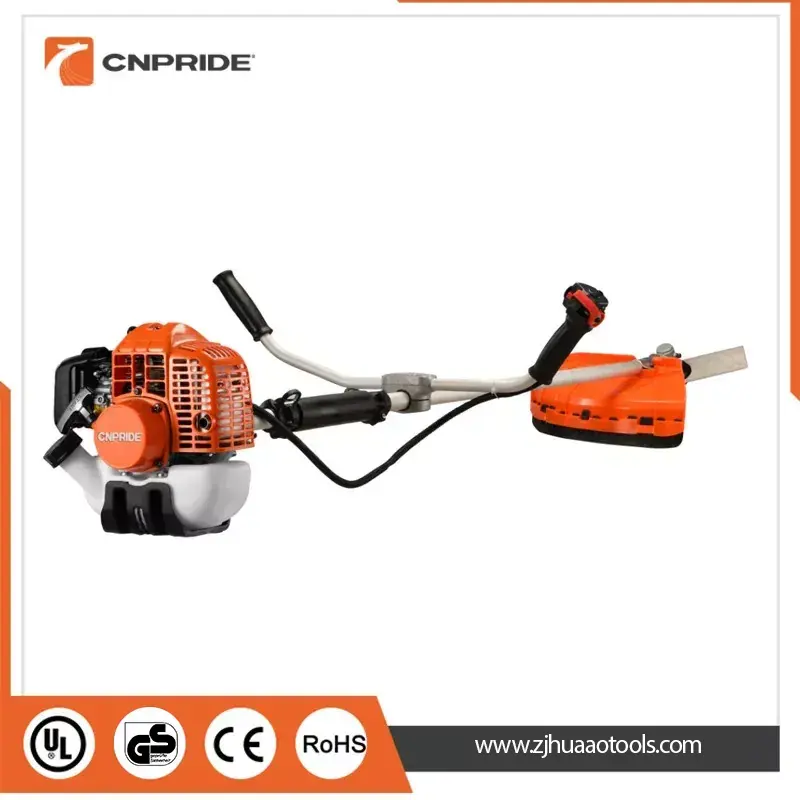
Table of Contents
- Engine Architecture and Power Delivery
- Shaft Structure and Vibration Control
- Durability Tiers: Matching the Machine to the Workload
- Fuel Mixing and Lubrication Discipline
- Cutting Attachment Selection and Blade Safety
- Maintenance Rhythm for Long Service Life
- Storage and Seasonal Preparation
- Frequently Asked Questions
- Factory Support and Customization
The 2 Stroke Gasoline Brush Cutter 26MM 28MM occupies a practical middle ground in the gasoline garden tool market. It is not the smallest homeowner unit, nor is it the heaviest clearing saw. Instead, it is a platform engineered around a proven 41.5CC two-stroke engine, a 26mm or 28mm aluminum drive tube, and a reinforced crankcase that can be serviced without splitting the entire engine block. For property managers who clear fence lines, maintain orchard rows, or reclaim overgrown lots, this configuration offers a useful balance of manageable weight and sustained cutting authority.
The questions that matter most are not about peak horsepower alone. They concern how the machine behaves after several hours of use, how easily it starts when the tank is full and the operator is already tired, and whether replacement parts can be sourced without waiting weeks for a specialty order. The sections below address those practical concerns in sequence, beginning with the engine and working outward to the shaft, the cutting head, and the maintenance routine that keeps the entire system in service.
Engine Architecture and Power Delivery
At the center of this platform is a single-cylinder, air-cooled 41.5CC two-stroke engine with a 40mm bore and 31mm stroke. Rated output is listed at 1.65kW, or 2.3 horsepower. Idle speed sits around 3000 revolutions per minute with a tolerance of 200, while maximum speed reaches approximately 10500 revolutions per minute. These figures matter because they describe an engine tuned for torque retention under load rather than a narrow high-rpm spike. In tall grass or light woody growth, the operator feels the difference in how the head maintains momentum when the blade enters dense material.
The engine uses a matched diaphragm carburetor with a copper mouth and an oil bubble primer for faster cold starts. A separate crankcase and cylinder design simplifies top-end service, allowing inspection of the piston, rings, and cylinder without disturbing the lower end. Chromium-plated cylinder walls and hardened steel piston rings are specified to reduce friction and improve heat resistance over repeated heat cycles. For operators who perform their own maintenance, this architecture is approachable: the cylinder can be removed with common tools, carbon deposits can be inspected, and the piston ring end gap can be checked without a full teardown.
Starting System and Cold-Start Behavior
The torsion-spring easy starter is rated for more than 10,000 push starts. Instead of requiring a sharp, explosive pull, the system stores energy in a spring and releases it to turn the engine at starting speed. In practice, a slow and continuous pull charges the spring, and the release does the work. This reduces the fatigue associated with repeated pulls on a cold morning and lowers the risk of flooding the engine through erratic cranking. The primer bulb should be pressed until fuel is visible, the choke engaged according to ambient temperature, and the starter pulled with a smooth motion until the engine fires.
Cold-start sequence: Prime the carburetor until fuel reaches the bulb, set the choke, pull the starter smoothly until the engine coughs, disengage the choke, and allow a short warm-up before applying load. Avoid holding the throttle open during cranking.
Shaft Structure and Vibration Control
The drive tube is available in 26mm and 28mm diameters, in either straight or split-pole configurations. The 28mm tube is the more rigid option and is often preferred when the machine will be used with heavier blades or in uneven terrain where the shaft may be subjected to side loads. A nine-tooth transmission shaft transfers power from the engine to the gear head. The tube is aluminum rather than steel, which keeps the overall weight lower while still providing sufficient stiffness for brush cutting tasks.
Vibration is managed through a combination of engine mounting, shaft rigidity, and anti-vibration black handlebars with reinforced polymer grips. The side-pack harness arrangement distributes the machine's weight across the operator's hip and shoulder rather than concentrating it in the hands. This is a meaningful detail for long sessions. When the harness is adjusted correctly, the cutting head can be guided with light hand pressure, and the operator can maintain a stable stance without gripping the handles tightly enough to cause numbness.
Straight versus Split Pole
A straight pole offers a direct power path and is often favored for precision work with a blade. A split pole separates into two sections for transport and storage, which is useful for crews that move between sites in smaller vehicles. Both configurations use the same 26mm or 28mm tube specification and the same nine-tooth shaft, so the choice is primarily about logistics rather than cutting performance. The split joint should be kept clean and properly tightened; a loose coupling introduces flex and can accelerate wear on the shaft splines.
Durability Tiers: Matching the Machine to the Workload
This brush cutter is offered in three durability tiers, and the distinction is useful because it prevents buyers from either overpaying for capacity they will never use or underestimating the demands of frequent work. The tiers are expressed in expected service hours rather than abstract quality labels, which makes the selection more concrete.
| ECO / DIY level | 80–100 hours for home users and occasional property maintenance |
| Semi-professional | 300 hours for frequent customers and seasonal contractors |
| Professional level | 500–800 hours for professional users and full-time forestry crews |
The 2 Stroke Gasoline Brush Cutter 26MM 28MM is positioned so that the same basic platform can be built to different endurance specifications through material selection and component grading. The professional tier does not simply add a label; it reflects a build intended to withstand repeated thermal cycles, higher duty cycles, and the sort of incidental impacts that occur when a blade meets a hidden stump. For a homeowner clearing a few hundred meters of fence line twice a year, the ECO tier is rational. For a contractor running the machine five days a week during clearing season, the semi-professional or professional tier is the appropriate choice.
Fuel Mixing and Lubrication Discipline
Two-stroke engines rely on oil mixed into the fuel to lubricate the crankshaft bearings, cylinder wall, and piston skirt. The specified mixing ratio for this engine is 25:1 or 40:1 using a two-cycle oil rated to FD grade. In practice, a 25:1 ratio is the safer starting point for a new engine and for fuels that may sit for short periods. The oil must be designed for air-cooled two-stroke engines; automotive or four-stroke oils do not disperse correctly and can leave deposits or fail to protect the bearing surfaces.
Fuel should be mixed in a clean container and used within a reasonable window. Gasoline begins to degrade after a few weeks, and stale fuel is a common cause of hard starting, carburetor fouling, and erratic idle. If the machine will not be used for more than a month, the tank should be drained and the engine run until the carburetor is empty. A fuel stabilizer can extend the usable life of the mix, but it does not make old fuel equivalent to fresh fuel.
- Use fresh gasoline with the correct octane rating and a two-cycle oil rated FD or higher.
- Measure the oil and fuel carefully; do not estimate the ratio by eye.
- Mix thoroughly in a separate container before filling the tank.
- Label the container clearly and keep it away from four-stroke fuel.
- Discard fuel that has been stored for an extended period or has begun to darken.
Oil Bubble and Carburetor Priming
The oil bubble primer draws fuel into the carburetor before starting. Pressing it several times until the bulb fills with fuel ensures that the diaphragm chamber has liquid fuel rather than air. This is especially important after the machine has been stored or after the fuel tank has been refilled from empty. Over-priming can flood the engine, so the bulb should be pressed until resistance is felt and fuel is visible, then stop.
Cutting Attachment Selection and Blade Safety
The machine can be fitted with a three-tooth blade, a tap-go trimmer head, or alloy blades in 40-tooth and 80-tooth configurations. The choice of attachment should follow the material being cut rather than the convenience of what is already mounted. A trimmer head is appropriate for grass, light weeds, and areas with obstacles such as fences and trees. A three-tooth blade is suited to heavier grass, saplings, and dense brush. Alloy blades with more teeth are intended for woody growth and small branches, and the manufacturer states that 40-tooth or 80-tooth alloy blades can cut 8–16cm branches in two to three seconds under proper conditions.
Blade thrust is the most serious hazard associated with metal cutting attachments. When a spinning blade contacts a fixed object such as a rock, stump, or wall, the reaction can throw the machine suddenly to the side, forward, or rearward. The risk increases when the blade is dull, when the wrong blade type is used, or when the operator approaches an obstacle at an angle that brings the blade's leading edge into contact with a hard surface. A sharp blade and a deliberate, controlled feed rate are therefore safety measures, not merely efficiency measures.
- Inspect the blade before each use for cracks, missing teeth, or deformation.
- Use the correct guard for the attachment; never operate a metal blade without the appropriate guard.
- Keep bystanders and animals well outside the work area; a 15-meter hazard radius is a practical minimum.
- Clear the work area of loose rocks, wire, and debris that could be thrown or caught in the blade.
- Maintain a firm stance and keep both hands on the controls; do not overreach.
Harness and Operator Stance
The side-pack harness should be adjusted so that the machine hangs at a comfortable cutting height without the operator needing to bend forward. The brush cutter should be held on the right side of the body, with the control handle in the right hand and the support handle in the left. A stance wider than shoulder width improves stability, and the engine should be stopped whenever the operator needs to turn around, clear a jam, or speak to someone. These habits reduce fatigue and lower the likelihood of a loss-of-control incident.
Maintenance Rhythm for Long Service Life
Maintenance on a two-stroke brush cutter is not complicated, but it is cumulative. Small neglects compound quickly: a dirty air filter enriches the mixture and causes carbon buildup; a fouled spark plug causes hard starting and misfires; a dry gearbox destroys the bevel gears; and a loose shaft coupling wears the splines. The schedule below reflects common practice for air-cooled two-stroke equipment and should be adapted to dust levels, load, and fuel quality.
| Air filter | Inspect before each use; clean or replace as needed. In dusty conditions, clean more frequently. |
| Spark plug | Inspect and clean around every 25 hours; replace if electrodes are eroded or deposits are heavy. |
| Fuel filter | Inspect periodically and replace when contaminated or discolored. |
| Gearbox grease | Apply lithium-based grease according to use; approximately every 20–25 hours is a practical baseline. |
| Cylinder cooling fins | Clean after each use in dry, dusty, or grassy conditions to prevent overheating. |
| Drive shaft coupling | Check tightness and cleanliness; lubricate the splines lightly and ensure the joint is secure. |
| Muffler and exhaust port | Inspect for carbon blockage periodically; clean the exhaust port when performance begins to drop. |
After roughly 10 hours of use, the air filter should be checked even if the machine appears to be running well. In practice, many operators inspect the filter after every tank of fuel in dusty conditions, because a partially blocked filter changes the mixture and increases fuel consumption. Paper filters can be tapped clean or blown out with low-pressure air; foam filters can be washed in a suitable solvent, dried, and lightly oiled. The filter should be replaced if it is torn, distorted, or saturated with oil.
Carbon and Exhaust Inspection
Over time, carbon deposits accumulate in the exhaust port and on the spark plug electrode. A restricted exhaust port reduces power and raises cylinder temperature. When the machine begins to feel sluggish at high speed or the spark plug shows heavy black deposits, the exhaust port and muffler should be inspected. Carbon removal is a mechanical task: scrape carefully with a soft tool, avoid scratching the piston crown or cylinder wall, and reassemble with a new gasket if the old one is compressed or damaged.
Storage and Seasonal Preparation
Seasonal storage is where many two-stroke machines deteriorate. Fuel left in the carburetor can evaporate and leave gummy deposits that block the jets. Moisture in the fuel tank can corrode the tank lining. Dust and grass residue on the cylinder fins can promote corrosion and reduce cooling efficiency. A short preparation routine prevents most of these problems.
- Empty the fuel tank and run the engine until it stops from fuel starvation.
- Remove the spark plug and add a small amount of two-stroke oil to the cylinder; pull the starter slowly a few times to distribute it, then reinstall the plug.
- Clean the air filter, cylinder fins, and shaft tube.
- Lubricate the gearbox and drive shaft coupling according to the maintenance schedule.
- Store the machine in a dry, dust-free location with the cutting attachment removed or guarded.
When the machine is returned to service, inspect the fuel lines for cracks, check the primer bulb for stiffness or leaks, and fill with fresh fuel mix. Do not attempt to start the engine on fuel that has been sitting in the tank since the previous season. A few minutes of preparation at the start of the season is far less burdensome than a carburetor rebuild.
Frequently Asked Questions
What fuel-to-oil ratio should be used in this 41.5CC engine?
The manufacturer specifies 25:1 or 40:1 using a two-cycle oil rated FD or higher. A 25:1 mix is a conservative choice for break-in and for fuel that will be used within a short period. Always mix fresh gasoline with the correct air-cooled two-stroke oil and do not substitute four-stroke engine oil.
How often should the air filter be cleaned in dusty conditions?
In dusty conditions, inspect the air filter after every tank of fuel or at least every few hours of operation. A clogged filter causes an enriched mixture, higher fuel consumption, and carbon buildup. Clean or replace the filter before the engine begins to show symptoms such as black smoke or sluggish acceleration.
Can a metal blade be used on the same machine as a trimmer head?
Yes, but the correct guard must be fitted for each attachment type. A metal blade requires a specific guard and should never be operated without it. The blade must be appropriate for the material being cut, and the operator should be alert to blade thrust when cutting near fixed objects such as rocks, stumps, and walls.
What causes a two-stroke brush cutter to lose power at high speed?
Common causes include a restricted exhaust port, a dirty air filter, a fouled spark plug, or a lean fuel mixture caused by an air leak. Check the air filter and spark plug first, then inspect the exhaust port for carbon buildup. If the problem persists, the carburetor settings and fuel lines should be examined.
How should the machine be stored between seasons?
Drain the fuel tank and run the engine until the carburetor is empty. Clean the air filter, cylinder fins, and shaft. Lubricate the gearbox and drive shaft coupling, and store the unit in a dry location. Before the next season, inspect the fuel lines and primer bulb, and fill with fresh fuel mix.
Factory Support and Customization
The 2 Stroke Gasoline Brush Cutter 26MM 28MM platform is produced by CNPRIDE POWER, a manufacturer based in Zhejiang with a focus on gasoline garden tools and a product range that includes brush cutters, earth augers, blowers, and mini tillers. The factory supports OEM and ODM work, including customized logos, colors, and packaging, with a minimum order quantity of 500 pieces for customized configurations. Standard delivery time is quoted at 30–45 working days depending on order volume and specification.
For buyers comparing platforms, the practical conclusion is that the 26MM/28MM shaft family is a sensible foundation when the workload falls between occasional homeowner use and continuous professional clearing. The 41.5CC engine provides enough displacement to drive a three-tooth blade or an alloy blade through light woody growth without the weight penalty of a larger clearing saw. The separate crankcase and cylinder simplify maintenance, and the availability of common wear parts reduces the risk of extended downtime.
If the application involves frequent blade changes, dusty conditions, or extended daily operation, the semi-professional or professional tier is the appropriate specification. If the machine will be used for seasonal property maintenance, the ECO tier is a rational starting point. In either case, fuel discipline, air-filter care, and blade inspection are the three habits that most directly determine how long the unit remains in reliable service.
Contact us today to discuss your land-clearing requirements, request configuration guidance, or begin an OEM/ODM project with a manufacturing partner who understands the demands of real-world brush cutting.
Contact Us