
A gasoline hedge trimmer is built for powerful cutting performance across large gardens, commercial landscapes, and dense shrubbery. Unlike electric or battery-powered units, gasoline trimmers deliver consistent torque, longer operation time, and the strength required to shape thick, mature hedges.
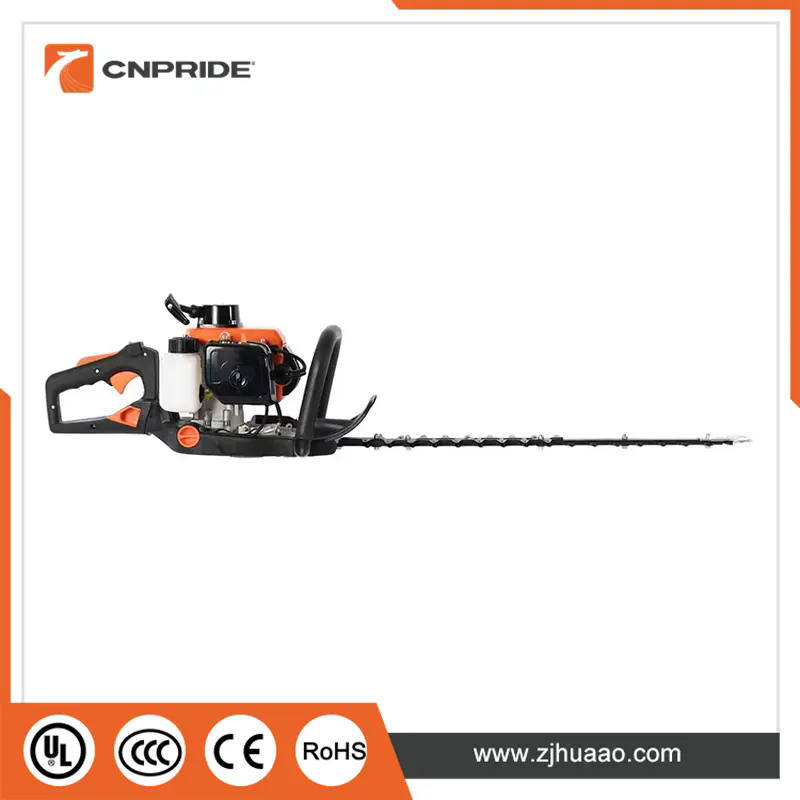
To clarify the machine’s overall capability, the following specifications outline the standard technical structure of a high-quality gasoline hedge trimmer:
| Parameter | Specification |
|---|---|
| Engine Type | 2-stroke gasoline engine |
| Displacement | 22–26cc |
| Rated Power | 0.65–0.85 kW |
| Fuel Tank Capacity | 0.6–0.8 L |
| Blade Length | 550–750 mm |
| Cutting Teeth Spacing | 28–35 mm |
| Idle Speed | 2800–3200 rpm |
| Maximum Speed | 9000–10,000 rpm |
| Net Weight | 5–6.5 kg |
| Starting System | Recoil pull-start |
| Vibration Reduction | Multi-point shock-absorption system |
| Main Applications | Hedge trimming, shrub shaping, decorative landscaping |
A gasoline hedge trimmer is engineered to handle extensive cutting tasks where strength, endurance, and reach are essential. Several core functional characteristics determine its value in professional or residential use:
The gasoline engine offers stronger output for thick, woody branches that electric systems struggle with. Higher torque ensures clean, swift cuts with fewer repeated passes, preserving the health of the shrub and reducing operator fatigue over long working periods.
Dual-action, laser-hardened steel blades produce smooth, vibration-controlled trimming. Longer blade lengths create smoother hedge surfaces, while wider tooth spacing accommodates denser vegetation. Precision cutting reduces plant stress and supports healthy seasonal growth.
A larger fuel tank directly improves operational efficiency. Landscapers covering parklands, estates, or roadside vegetation can work uninterrupted without frequent refueling stops, allowing for higher productivity during peak trimming seasons.
Anti-vibration mounts, soft-touch handles, and balanced body weight minimize strain during prolonged operation. Thoughtful ergonomic design helps workers maintain stability during overhead cutting or when trimming tall, linear hedges.
Metal components, reinforced gear systems, and heat-resistant housings contribute to mechanical longevity. Professional-grade machines withstand repeated heavy workloads and extreme outdoor conditions while maintaining cutting efficiency.
Battery trimmers lack the sustained torque needed for coarse branches and large hedge systems. Gasoline engines maintain performance even as resistance increases, providing a decisive advantage in dense landscaping environments.
Power cords limit movement, and batteries limit run time. Gasoline units allow full mobility across estates, orchards, campuses, roadside vegetation, and agricultural boundaries—areas where constant relocation is required.
During peak maintenance months, landscapes require nonstop trimming. Gasoline trimmers sustain long hours of work without dependency on charging cycles, making them more aligned with demanding schedules.
Heavy-duty engine structures ensure long service life. Landscapers who manage large hedge volumes rely on a tool that will withstand years of seasonal stress.
From ornamental shrubs to heavy boundary hedges, gasoline trimmers adapt to different environments, making them a versatile investment for both homeowners and professionals.
Choosing the right gasoline hedge trimmer requires understanding how the machine’s features align with specific trimming needs. Here is a strategic guide:
Higher displacement enhances trimming capability but increases weight. Property owners with smaller gardens may select a lighter engine, while commercial landscapers benefit from maximum torque.
550–600 mm: For compact gardens and shaped shrubs.
650–750 mm: For long or tall hedges requiring smooth, linear cuts.
Longer blades reduce trimming time and provide a cleaner visual finish across wide surfaces.
Low-vibration systems prevent strain on wrists and arms, especially during extended shifts. Safety guards and firm handle positioning protect operators from accidental blade contact.
Regular inspection of spark plugs, air filters, blade alignment, lubrication, and fuel mixtures ensures smooth operation and prevents engine failure. Regular sharpening keeps blades efficient and prevents tearing vegetation.
Begin trimming from the bottom upward to remove weight gradually and maintain hedge structure. Use sweeping motions for uniformity, and maintain consistent blade angles for aesthetically balanced surfaces.
Q: How often should the blade be sharpened for optimal cutting performance?
A: The blade should be sharpened every 20–30 hours of use, depending on vegetation density. Dull blades tear branches rather than slicing them cleanly, which increases engine load and can harm plant health. Regular sharpening keeps cuts smooth and reduces operator fatigue during extended trimming.
Q: What is the correct fuel mixture for a standard 2-stroke gasoline hedge trimmer?
A: A common mixture ratio is 25:1 or 40:1, depending on the manufacturer’s instructions. Using incorrect ratios can cause carbon buildup, overheating, or engine damage. Always use high-quality 2-stroke engine oil and premix properly before adding fuel to the tank.
The future of gasoline hedge trimmers continues to evolve toward lower emissions, enhanced fuel efficiency, and improved vibration-reduction systems. While electric and battery-powered tools gain popularity for light work, gasoline trimmers remain irreplaceable for extensive, demanding trimming tasks requiring strength and endurance. The landscape maintenance industry continues to rely on gasoline systems for their cutting force, mobility, and long-term reliability.
Brands like Huaao focus on delivering machines that combine consistent torque, durable blade technology, user-centered ergonomics, and stable engine design. The commitment to manufacturing dependable and high-performance equipment ensures that both professional landscapers and property owners can achieve precise, clean, and visually appealing trimming results.
For additional product details, customized specifications, or purchasing guidance, contact us to receive professional support tailored to your landscaping needs.


